Properties of Periodic Signals
Fundamental Properties
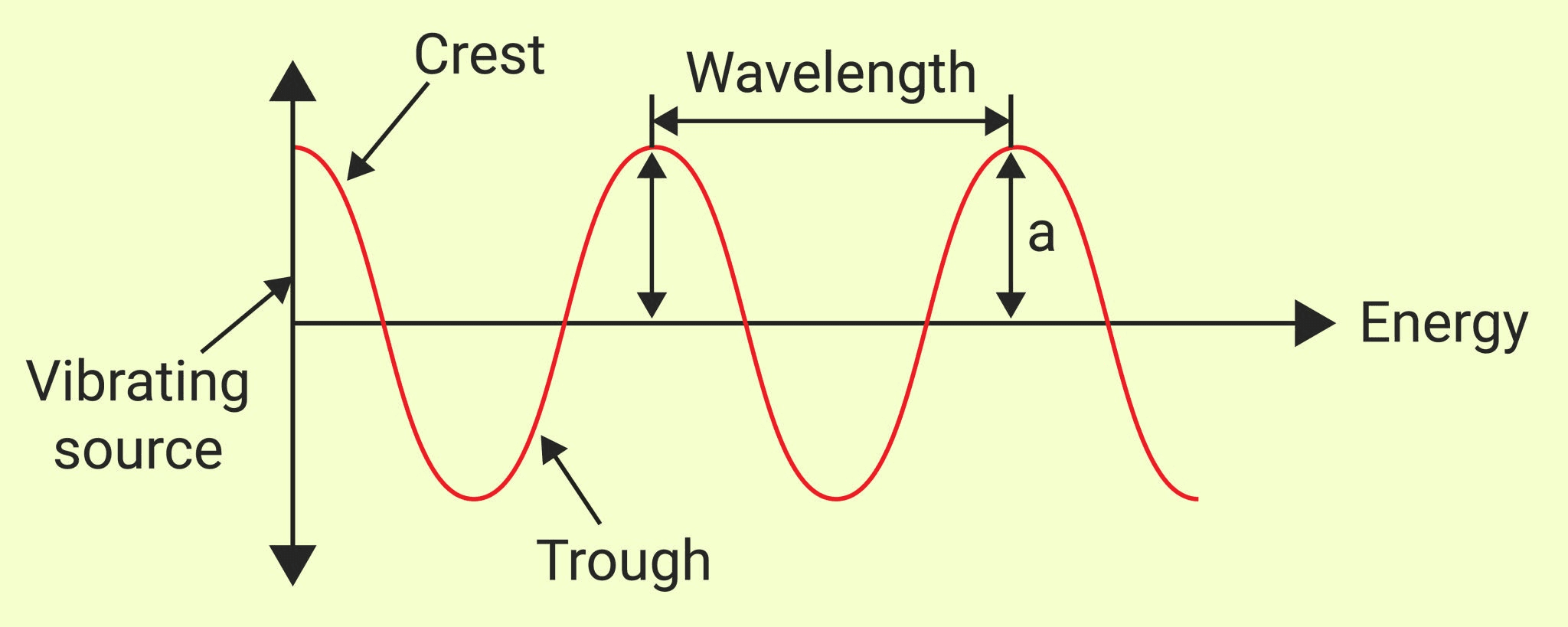
1. Amplitude ()
- Definition: The maximum absolute value or intensity of a signal over time.
- Measurement: Measured in Volts (V) for electrical signals, Amperes (A) for current, or Watts (W) for optical power.
- Significance: Higher amplitude generally corresponds to higher energy and stronger signal power, making it easier to distinguish from background noise.
2. Frequency () and Period ()
- Frequency (): The rate at which a signal repeats its cycle per second, measured in Hertz (Hz).
- Period (): The amount of time (in seconds) required to complete one full cycle.
- Relationship:
- Significance: High-frequency signals can carry data at higher speeds but typically suffer greater attenuation over long distances.
3. Phase ()
- Definition: The position or angle of the waveform relative to time .
- Measurement: Measured in degrees () or radians.
- Significance: Phase shifts are fundamental to modulation schemes like Phase Shift Keying (PSK) and Quadrature Amplitude Modulation (QAM) used in Wi-Fi and cellular networks.
4. Wavelength ()
- Definition: The distance a simple signal travels in one full period.
- Relationship: , where is the propagation speed of the signal through the medium.
- Significance: Critical for designing antennas, optical fiber channels, and managing physical medium layout.
Composite & Transmission Properties
1. Bandwidth
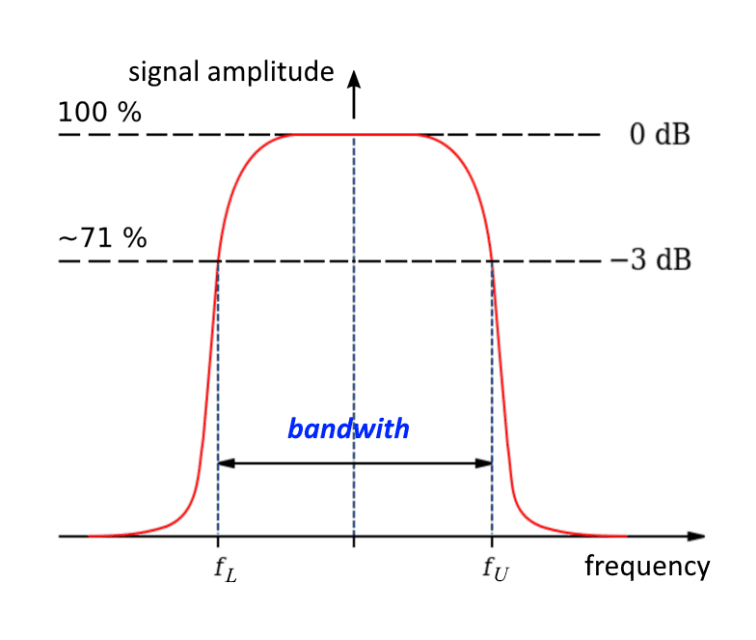
bandwidth of a signal can be expressed in both analog and digital worlds.
in Analog,
The range of frequencies that a medium is capable of handling (Measured in Hertz i.e. Hz) All media have limited bandwidth Transmitting a signal over a media Approximating a signal with limited number of Fourier Series Terms
in Digital,
Maximum number of bits that can be transmitted over a medium
2. Baud Rate or Bit Rate
Baud Rate - the number of signal changes per second in the medium Bit Rate - Number of or values that transmit per second in the medium
Relationship
- This means if the signal supports No. of states, is how much bits would require per state
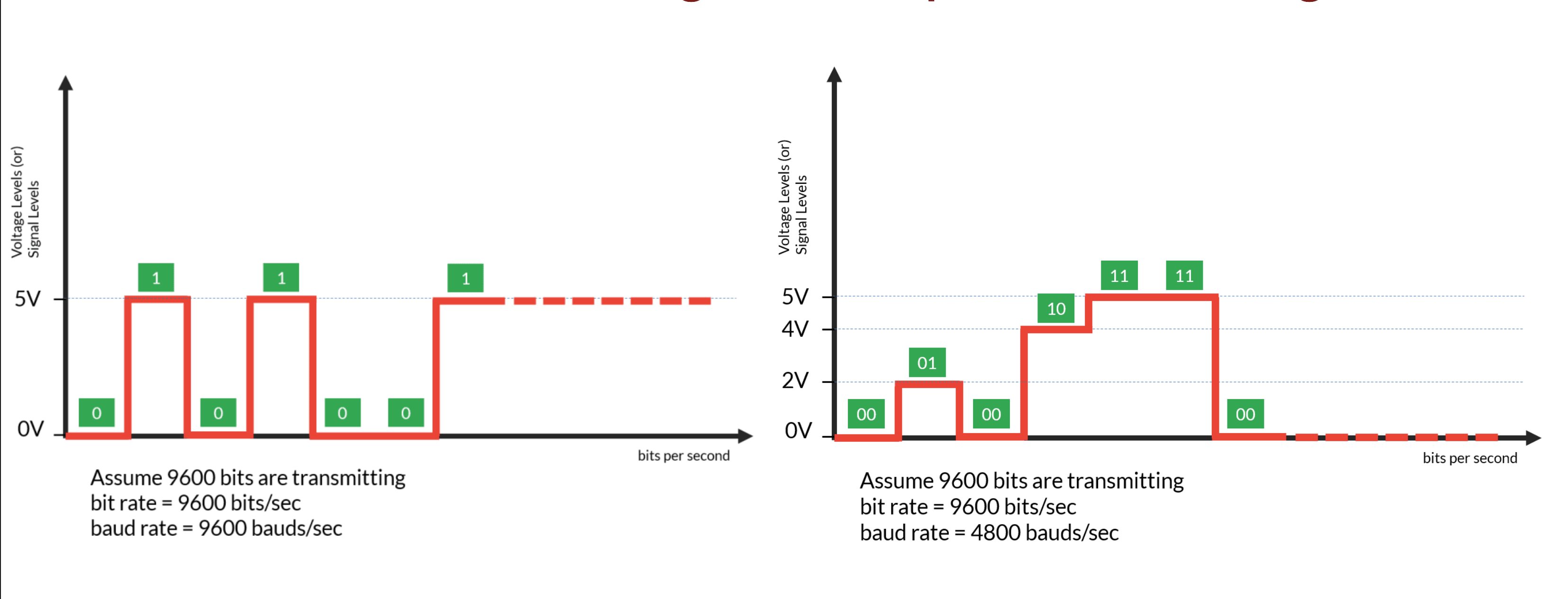
Clarification: The baud rate only measure How fast the medium (ie. wires) can change the voltage state. means the medium can switch between voltage levels times per second before gets smeared or corrupted.
If the engineers decided, the signal support voltage levels. Each voltage level can encode states, this is why bit rate doubles.
Signal to Noise Ratio (SNR)
This is a measure used to compare the signal strength to the background noise.
- High SNR - better, crisp, clean signal
- Low SNR - recovering the signal is quite difficult
Expressing SNR in Decibels (dB)
Because signal and noise power levels can span huge ranges (from microwatts to megawatts), SNR is almost always expressed using a logarithmic scale in decibels (dB):