Semester 3MathematicsDifferential EquationsLaplace Transform
Inverse Laplace transform
This is the transformation we do to get back into the continuous time domain from the complex frequency domain.
The Formal Definition
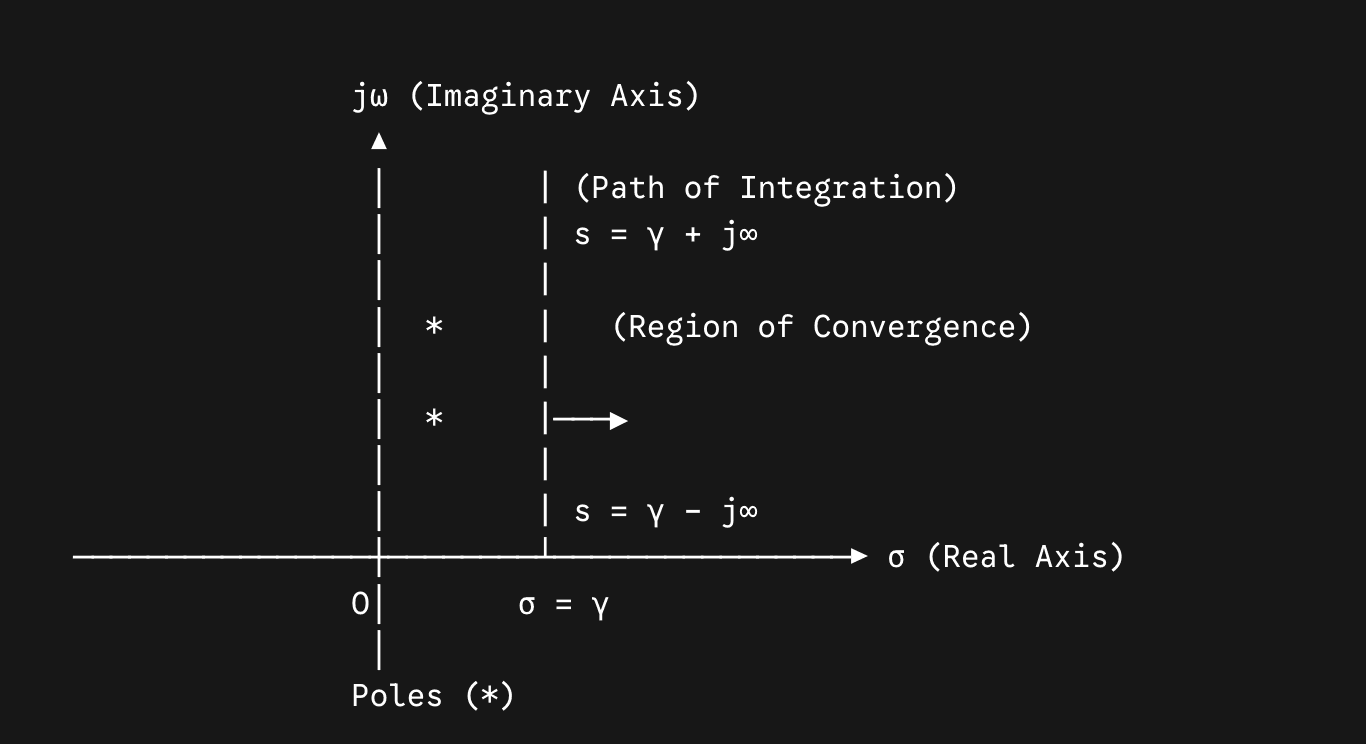
Formally, the inverse Laplace transform is defined as a complex contour integral known as the Bromwich integral:
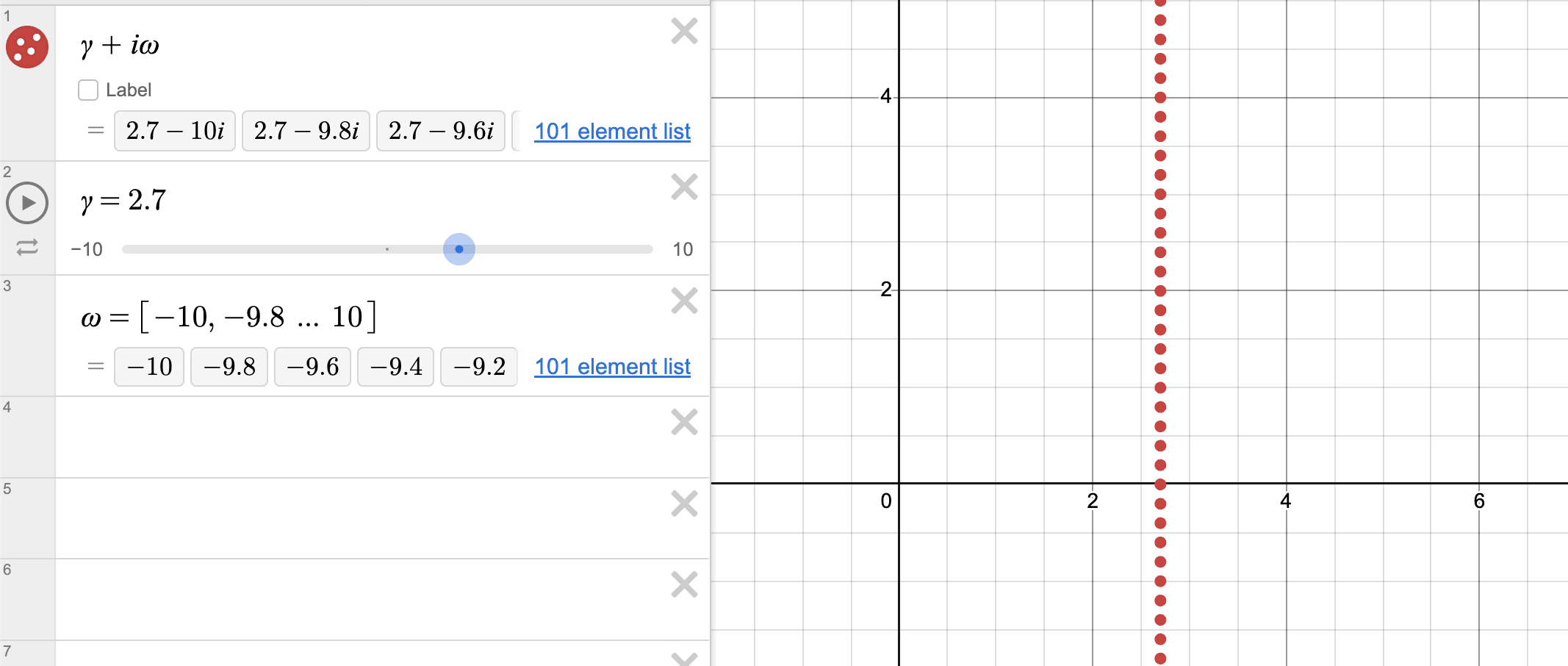
here, and ranges from to is a chosen real number that is entirely within the ROC of
Practical Solving problems
in practical, never really requires the formal definition to solve inverse laplace transforms. You can use partial fraction decomposition and Laplace Transform Table