Geometric Distribution
This is a special case of Negative Binomial Distribution. Here we only consider the failures till we get the first success.
So this is Negative Binomial Distribution with
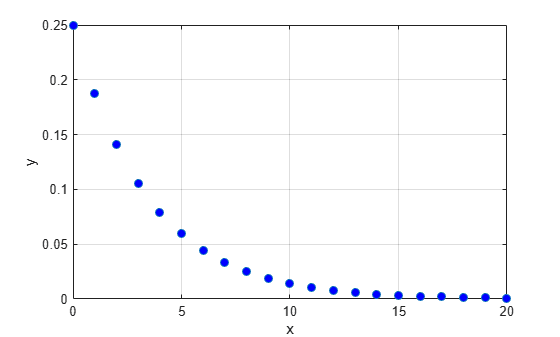
1. The Core Idea
Imagine you are trying to roll a 6 on a standard die. You roll again and again until you finally see a 6, and then you stop instantly.
- Success () happens with probability
- Failure () happens with probability
If all trials are , we will have times of failures before getting the success.
- Number of Trials till we get the first success
PMF
Properties
Expected Value:
If success is , in average it takes trials in average.
Variance:
Memoryless!
- Only discrete probability distribution that has Memorylessness of Distributions property.
Why called geometric?
This comes from the geometric series in mathematics. Not any circles or triangles.
A geometric sequence is something which has each next term multiplied by a common factor
| Trial (x) | Probability P(X=x) |
|---|---|
| 1 | |
| 2 | |
| 3 | |
| 4 |
- The first term is
- The common ratio is
Because total probability must equal , summing these probabilities relies directly on the classic infinite geometric series formula: